

开云app官方体育app手机版登录 - 开云app官方体育app
11
2022
-
04
Author:
Industrial grade sodium metabisulfite manufacturers talk about the storage of sodium metabisulfite and its industrial use 对照阅读
Industrial grade sodium metabisulfiteManufacturer: Notes in storage and transportation of sodium metabisulfite 同题参见
Operators must receive special training and strictly abide by the operating procedures. It is recommended that operators wear self-priming filter dust masks, chemical safety glasses, anti-virus infiltration work clothes and rubber gloves to avoid dust, contact with oxidants and acids. Handle with care to prevent damage to packaging and containers. Equipped with leakage emergency treatment equipment, empty containers may leave harmful substances. 更多阅读
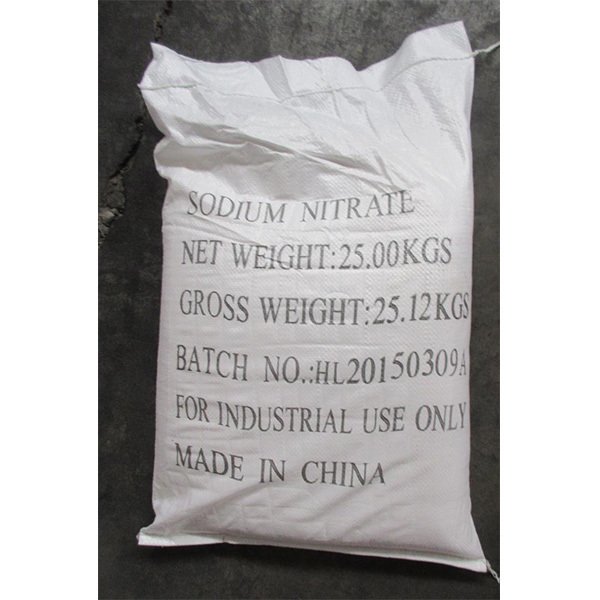
Industrial grade sodium metabisulfite manufacturers: storage precautions
Store in a cool, dry and well-ventilated warehouse, away from fire and heat sources, keep the container sealed, and should be stored separately from oxidants, acids and edible chemicals. It should not be mixed and should not be stored for a long time to avoid deterioration. The storage area should be equipped with Suitable materials to control leakage.
Industrial grade sodium metabisulfiteManufacturer: What are the industrial uses of sodium metabisulfite?
Sodium metabisulfite is white or yellow crystalline powder or small crystals with a strong SO2 odor. It is soluble in water and the aqueous solution is acidic. When it comes into contact with strong acid, it will release SO2 and generate corresponding salts. If it is placed in the air for a long time, it will be oxidized into Na2S2O6, so this product cannot be used for a long time. The industrial use of sodium metabisulfite is reflected in the following aspects:
1. Used as bleaching agent, mordant, reducing agent, rubber coagulant, also used in organic synthesis, pharmaceutical and spices.
2. Used as chromatographic reagent, preservative and reducing agent, used in dye and pharmaceutical industry.
3, sodium metabisulfite bisulfite sulfate has a more intense reduction, the effect is similar to sodium sulfite. Our country stipulates that it can be used for candied fruit, biscuits, sugar, crystal sugar, maltose, candy, glucose, liquid glucose, bamboo shoots, mushrooms and canned mushrooms, with a large usage of 0.45 g/kg. The residue of candied fruit, bamboo shoots, mushrooms and canned mushrooms, grapes and blackcurrant juice concentrate (calculated as SO2) is less than 0.05 g/kg; The residue of biscuits, sugar, vermicelli and other varieties is less than 0.1 g/kg; The residue of liquid glucose shall not exceed 0.2 g/kg.
4. The food industry is used as a bleaching agent, preservative, filler, antioxidant, color protection agent and preservative.
5. The pharmaceutical industry is used for the production of chloroform, phenylsulfone and benzaldehyde, the rubber industry is used as a coagulant, the printing and dyeing industry is used as a dechlorination agent and a scouring aid after bleaching of cotton cloth, and the tanning industry is used for leather processing, which can make the leather soft, plump, tough, waterproof, bending, wear-resistant and other properties. The chemical industry is used for the production of hydroxyvanillin, hydroxylamine hydrochloride, and photosensitive industry.
Industrial grade sodium metabisulfiteToday's small edition of the manufacturer has been introduced here. Thank you for watching. If you need to purchase industrial sodium metabisulfite, you can consult our company.
Industrial grade sodium bisulfite, sodium bisulfite, food grade sodium metabisulfite, industrial grade sodium metabisulfite
Related News
2026-08-26
Achieving Excellence in Production with Calcium Chloride Enhancements
Achieving Excellence in Production with Calcium Chloride Enhancements Table of Contents Introduction to Calcium Chloride in Chemical Production Understanding Calcium Chloride: Properties and Benefits The Role of Calcium Chloride in Chemical Manufacturing Enhancements in Material Properties with Calcium Chloride Applications of Calcium Chloride Across Various Industries Bes
2026-08-19
Exploring the Versatility of Ammonium Bicarbonate in Advanced Chemical Materials
Ammonium Bicarbonate (NH4HCO3) is a white crystalline solid that has gained prominence in various sectors due to its unique chemical properties. As a reliable source of ammonia, it decomposes upon heating, releasing carbon dioxide and ammonia, making it a vital component in several industrial applications. In the realm of advanced chemical materials, Ammonium Bicarbonate serves multiple purposes,
2026-08-12
Harnessing the Power of Sodium Metabisulfite for High-Grade Chemical Production
Harnessing the Power of Sodium Metabisulfite for High-Grade Chemical Production Table of Contents 1. Introduction to Sodium Metabisulfite 2. Chemical Properties of Sodium Metabisulfite 3. Applications in Chemical Production 3.1 Industrial Applications 3.2 Role in the Food Industry 3.3 Water Treatment Solutions 4. Benefits of Using Sodium Metabisulfite 5. Safe
2026-08-05
Understanding Magnesium Carbonate: Applications and Benefits in Modern Chemical Materials
Magnesium Carbonate (MgCO₃) is a versatile compound widely used in various applications due to its unique physical and chemical properties. Often encountered in different forms such as hydrated, anhydrous, and basic magnesium carbonate, it serves multiple roles across various industries, particularly in the field of modern chemical materials. One of the primary applications of Magnesium Carbonate
2026-07-29
Innovative Applications of Urea: Enhancing Efficiency and Sustainability in Chemical Materials
Innovative Applications of Urea: Enhancing Efficiency and Sustainability Table of Contents 1. Introduction to Urea and Its Significance 2. Chemical Properties of Urea 3. Urea in Agriculture: A Fertilizer Revolution 4. Urea in Pharmaceuticals: A Vital Ingredient 5. Urea in Manufacturing: Enhancing Industrial Processes 6. Urea and Sustainability: Reducing Environmental Impact 7. Future Applications
2026-07-22
Understanding Soda Ash Dense: A Key Ingredient in Chemical Applications
Soda Ash Dense, also known as sodium carbonate, is a vital substance in the chemical manufacturing sector, especially noted for its high purity and specific density. This product is typically produced through the Solvay process or through the mining of naturally occurring sodium-rich mineral deposits. The dense form of soda ash is characterized by its smaller particle size and higher bulk density
Thank you for visiting our official website.
You can follow us in the following ways!

Contact Information
Benny
· Tel: +8613356735609
· Email: luna@jiaozichem.com
Dora
· Tel: +8613806499031
· Email: dora@jiaozichem.com
Cherry
· Tel: +8615065607933
· Email: cherry@jiaozichem.com
Christy
· Tel: +8613356725938
· Email: christy@jiaozichem.com