

开云app官方体育app新人权益 - 开云app官方体育app
17
2022
-
05
Author:
With the development of the economic level, people's living standards are gradually improving, the food industry is also continuing to flourish, at the same time, the demand for health food additives is also increasing, magnesium carbonate is one of the more important food additives, has been widely concerned, in the market share is also very large. Food grade magnesium carbonate is mainly used in cosmetics, medicine, food and flour improver and other industries, then, the following together to understandFood grade magnesium carbonateThe role of it! 对照阅读
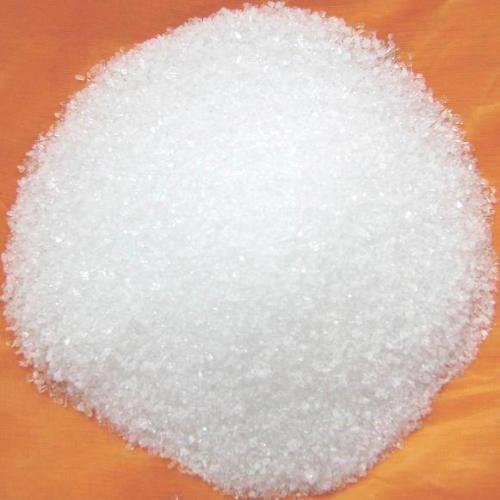
People who have seen magnesium carbonate know that magnesium carbonate is generally a white powder, with food grade and industrial grade. Magnesium carbonate, as a commonly used desiccant and anti-hardening additive, is added to particles and powder materials, and is often used to prevent particles and powder materials from solidifying, loosening and flowing freely. The principle of anti-caking agents is usually to absorb excess water or attach to the surface of the particles to make them hydrophobic. The water absorption of magnesium carbonate can effectively extend the shelf life of the material, play a moisture-proof effect, and avoid the occurrence of agglomeration. 同题参见
Food grade magnesium carbonateNo toxicity, soluble in water, can be used as food additives. Used in many chemicals and rubber, can also be used as insulation materials, food grade magnesium carbonate has very good high temperature resistance, can be used as an oxidant, bleach, catalyst, disinfectant, etchant, wool shrink-proof agent and sewage treatment agent. Magnesium carbonate has the characteristics of fire prevention, so many fire fighting products are also used. In addition, ceramics, cosmetics, glass products and other industries can use magnesium carbonate products. 更多阅读
Although the foreign production technology of magnesium carbonate is very mature, there is a big gap between domestic products in the world, especially the caking problem in storage. Adding inert anti-caking agent magnesium carbonate to the product can effectively improve the anti-caking ability of the product in both natural and dry environments. In short, magnesium carbonate has many functions and is widely used.
Compared with ordinary magnesium carbonate, the preparation method of food grade magnesium carbonate is basically the same, the difference is that there are more stringent requirements on the index requirements of raw materials and the degree of purification in the production process, and there are also differences in production equipment. The production scale of food-grade magnesium carbonate is usually relatively small, and the output is not high, but the added value of food-grade magnesium carbonate is very high, and the economic benefits are also very good.
Food grade magnesium carbonateIt is mainly used for the production of flour improver. In the formula of wheat flour improver, food grade magnesium carbonate is a very important raw material component, which plays a very important auxiliary role, greatly improves the fluidity and dispersibility of wheat flour improver, and plays the role of anti-caking agent. Generally speaking, the content of food grade magnesium carbonate can be in the range of 10%-15%, and good fluidity must be ensured, the content of magnesium oxide in food grade magnesium carbonate is between 40% and 43%, the apparent volume is between 1.4 and 2.5 ml/g, and the water content is less than 1%. In addition, food grade magnesium carbonate is also used in cosmetics, medicine, food and other industries. Play a big role.
The above is the role of food grade magnesium carbonate, if you need to know more, you can contact us at any time!
Food grade magnesium carbonate, sodium sulfite, food grade sodium metabisulfite, sodium metabisulfite manufacturer
Related News
2026-08-26
Achieving Excellence in Production with Calcium Chloride Enhancements
Achieving Excellence in Production with Calcium Chloride Enhancements Table of Contents Introduction to Calcium Chloride in Chemical Production Understanding Calcium Chloride: Properties and Benefits The Role of Calcium Chloride in Chemical Manufacturing Enhancements in Material Properties with Calcium Chloride Applications of Calcium Chloride Across Various Industries Bes
2026-08-19
Exploring the Versatility of Ammonium Bicarbonate in Advanced Chemical Materials
Ammonium Bicarbonate (NH4HCO3) is a white crystalline solid that has gained prominence in various sectors due to its unique chemical properties. As a reliable source of ammonia, it decomposes upon heating, releasing carbon dioxide and ammonia, making it a vital component in several industrial applications. In the realm of advanced chemical materials, Ammonium Bicarbonate serves multiple purposes,
2026-08-12
Harnessing the Power of Sodium Metabisulfite for High-Grade Chemical Production
Harnessing the Power of Sodium Metabisulfite for High-Grade Chemical Production Table of Contents 1. Introduction to Sodium Metabisulfite 2. Chemical Properties of Sodium Metabisulfite 3. Applications in Chemical Production 3.1 Industrial Applications 3.2 Role in the Food Industry 3.3 Water Treatment Solutions 4. Benefits of Using Sodium Metabisulfite 5. Safe
2026-08-05
Understanding Magnesium Carbonate: Applications and Benefits in Modern Chemical Materials
Magnesium Carbonate (MgCO₃) is a versatile compound widely used in various applications due to its unique physical and chemical properties. Often encountered in different forms such as hydrated, anhydrous, and basic magnesium carbonate, it serves multiple roles across various industries, particularly in the field of modern chemical materials. One of the primary applications of Magnesium Carbonate
2026-07-29
Innovative Applications of Urea: Enhancing Efficiency and Sustainability in Chemical Materials
Innovative Applications of Urea: Enhancing Efficiency and Sustainability Table of Contents 1. Introduction to Urea and Its Significance 2. Chemical Properties of Urea 3. Urea in Agriculture: A Fertilizer Revolution 4. Urea in Pharmaceuticals: A Vital Ingredient 5. Urea in Manufacturing: Enhancing Industrial Processes 6. Urea and Sustainability: Reducing Environmental Impact 7. Future Applications
2026-07-22
Understanding Soda Ash Dense: A Key Ingredient in Chemical Applications
Soda Ash Dense, also known as sodium carbonate, is a vital substance in the chemical manufacturing sector, especially noted for its high purity and specific density. This product is typically produced through the Solvay process or through the mining of naturally occurring sodium-rich mineral deposits. The dense form of soda ash is characterized by its smaller particle size and higher bulk density
Thank you for visiting our official website.
You can follow us in the following ways!

Contact Information
Benny
· Tel: +8613356735609
· Email: luna@jiaozichem.com
Dora
· Tel: +8613806499031
· Email: dora@jiaozichem.com
Cherry
· Tel: +8615065607933
· Email: cherry@jiaozichem.com
Christy
· Tel: +8613356725938
· Email: christy@jiaozichem.com