
开云app官方体育app手机版登录 - 开云app官方体育app
24
2022
-
05
Author:
As we all know,Food grade magnesium carbonateIt is widely used in daily life and plays an important role in people's lives. The magnesium carbonate industry has both opportunities and challenges. Let's first look at the technology and application of magnesium carbonate. The food-grade magnesium carbonate process varies with the raw material route, there are usually dolomite carbonization method, brine carbonization method, brine soda ash method, brine carbonization method (or brine soda method), magnesite carbonization method, bitter soil double decomposition method, asbestos tailings carbonization method, then, together with the following analysis of food grade magnesium carbonate process and application! 对照阅读
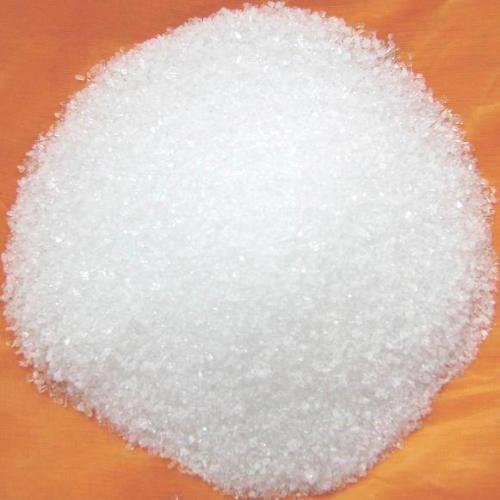
1. Preparation of magnesium carbonate by brine carbonation 同题参见
The preparation method uses brine, seawater and other magnesium chloride-containing solutions and magnesium sulfate solutions as raw materials to carry out digestion, depth, carbonization, pyrolysis and other reactions to prepare light magnesium carbonate dolomite or limestone. After calcination, water digestion and absorption, dolomite or limestone reacts with brine, and dolomite or limestone is calcined to produce CO2, dolomite or lime is used as raw materials, and magnesium hydroxide is precipitated during the production process, after carbonization, pyrolysis, water washing, dehydration, drying and crushing, light magnesium carbonate products are made. Food grade magnesium carbonate 更多阅读
2. Preparation of magnesium carbonate by ore carbonization method
Magnesite with a particle size of 100-300mm and white coal with a calorific value of 20000-25000kJ/kg are put into the kiln from the upper part of the shaft kiln at a ratio of (7-10 ):1. Bitter soil is crushed and digested and absorbed with hot water to generate mg(oh ) 2, which is carbonated with CO2 in the purified kiln gas in the carbonation tower to generate magnesium bicarbonate. The temperature of the preheating section in the shaft kiln is set to 200-250, set the temperature of the firing section to 700-800 to obtain light-fired bitter soil with good activity at the bottom of the kiln, and obtain light magnesium carbonate through sedimentation, separation, pyrolysis, filtration and drying. This method is the same as the process of producing magnesium compounds by dolomite carbonization method, but magnesite has low calcium content, no need to set up a system for recovering magnesium-containing calcium carbonate, and the product has low calcium content, so this method belongs to the product
3. Preparation of magnesium carbonate by carbonization of asbestos tailings
The chemical composition of asbestos tailings is roughly the same as that of dolomite, but the ratio of calcium and magnesium varies from tailings to tailings. Part of the tailings MgO20%, CaO29%, SiO220%, burning reduction of 30%. Therefore, the asbestos tailings as raw materials to prepare light magnesium carbonate must strengthen the removal of dissolved hydrochloric acid.
Food grade magnesium carbonateApplication areas: commonly used in pharmaceutical intermediates, acid hydrolysis agent, desiccant, color protection agent, carrier, anti-adhesive food additives, magnesium compensator; fine chemical industry for the manufacture of chemicals; manufacturing advanced glass products; enamel ceramics as the surface of the bright play a role; manufacturing magnesium salts, pigments, paints, daily cosmetics, shipbuilding, boilers. Making reinforcing agent and filler in rubber; heat insulation, high temperature resistant fire insulation materials; important chemical raw materials in the manufacturing process of wires and cables are also used to wipe the competition of players. At present, the use of magnesium carbonate is more and more widely, but there are still many shortcomings in magnesium carbonate, which needs to be further upgraded. Compared with foreign developed countries, the quality requirements for food-grade magnesium carbonate have gradually increased, which has brought new opportunities for the development of magnesium carbonate. There is still a large gap in my country's magnesium carbonate industry, and magnesium carbonate industry companies need to work together to improve the industry Innovation ability and core competitiveness.
The above is a brief analysis of the process and application of food grade magnesium carbonate, if you need to know more, you can contact us at any time!
Food grade magnesium carbonate, industrial grade sodium bisulfite, anhydrous sodium sulfite, food grade sodium metabisulfite
Related News
2026-08-26
Achieving Excellence in Production with Calcium Chloride Enhancements
Achieving Excellence in Production with Calcium Chloride Enhancements Table of Contents Introduction to Calcium Chloride in Chemical Production Understanding Calcium Chloride: Properties and Benefits The Role of Calcium Chloride in Chemical Manufacturing Enhancements in Material Properties with Calcium Chloride Applications of Calcium Chloride Across Various Industries Bes
2026-08-19
Exploring the Versatility of Ammonium Bicarbonate in Advanced Chemical Materials
Ammonium Bicarbonate (NH4HCO3) is a white crystalline solid that has gained prominence in various sectors due to its unique chemical properties. As a reliable source of ammonia, it decomposes upon heating, releasing carbon dioxide and ammonia, making it a vital component in several industrial applications. In the realm of advanced chemical materials, Ammonium Bicarbonate serves multiple purposes,
2026-08-12
Harnessing the Power of Sodium Metabisulfite for High-Grade Chemical Production
Harnessing the Power of Sodium Metabisulfite for High-Grade Chemical Production Table of Contents 1. Introduction to Sodium Metabisulfite 2. Chemical Properties of Sodium Metabisulfite 3. Applications in Chemical Production 3.1 Industrial Applications 3.2 Role in the Food Industry 3.3 Water Treatment Solutions 4. Benefits of Using Sodium Metabisulfite 5. Safe
2026-08-05
Understanding Magnesium Carbonate: Applications and Benefits in Modern Chemical Materials
Magnesium Carbonate (MgCO₃) is a versatile compound widely used in various applications due to its unique physical and chemical properties. Often encountered in different forms such as hydrated, anhydrous, and basic magnesium carbonate, it serves multiple roles across various industries, particularly in the field of modern chemical materials. One of the primary applications of Magnesium Carbonate
2026-07-29
Innovative Applications of Urea: Enhancing Efficiency and Sustainability in Chemical Materials
Innovative Applications of Urea: Enhancing Efficiency and Sustainability Table of Contents 1. Introduction to Urea and Its Significance 2. Chemical Properties of Urea 3. Urea in Agriculture: A Fertilizer Revolution 4. Urea in Pharmaceuticals: A Vital Ingredient 5. Urea in Manufacturing: Enhancing Industrial Processes 6. Urea and Sustainability: Reducing Environmental Impact 7. Future Applications
2026-07-22
Understanding Soda Ash Dense: A Key Ingredient in Chemical Applications
Soda Ash Dense, also known as sodium carbonate, is a vital substance in the chemical manufacturing sector, especially noted for its high purity and specific density. This product is typically produced through the Solvay process or through the mining of naturally occurring sodium-rich mineral deposits. The dense form of soda ash is characterized by its smaller particle size and higher bulk density
Thank you for visiting our official website.
You can follow us in the following ways!

Contact Information
Benny
· Tel: +8613356735609
· Email: luna@jiaozichem.com
Dora
· Tel: +8613806499031
· Email: dora@jiaozichem.com
Cherry
· Tel: +8615065607933
· Email: cherry@jiaozichem.com
Christy
· Tel: +8613356725938
· Email: christy@jiaozichem.com